
What are GPT sites? A plain explainer of how get-paid-to platforms work and what tasks actually pay.
GPT stands for "get-paid-to". These are platforms that pay small amounts for completing specific tasks — the model predates smartphones by a decade and has simply moved onto them.
Someone is always buying something specific:
Research firms buy consumer opinion
App developers buy feedback on what breaks
Game studios buy players who reach real milestones
Advertisers buy attention they can verify
The GPT site sits in the middle, keeps a margin, and passes the rest to whoever did the task. That's the whole mechanism — and it explains why rates differ so much between task types.
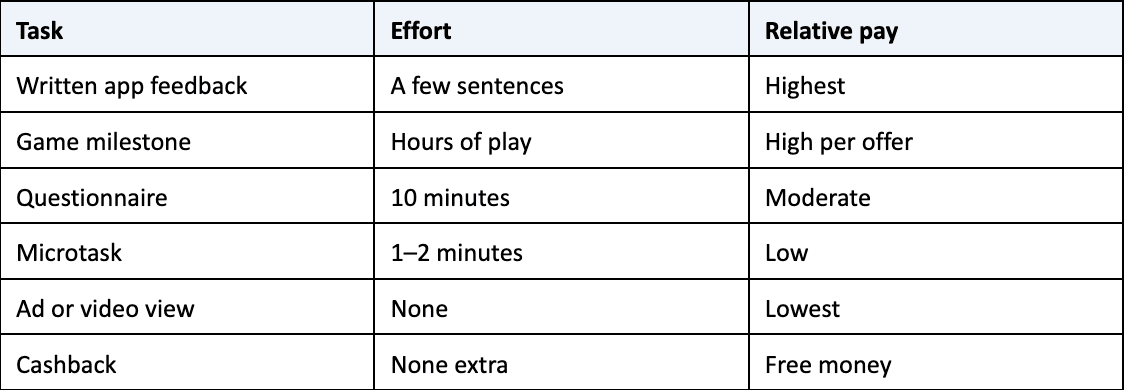
A microtask is the smallest unit here — a short, tightly defined job you can clear while waiting for something. Modern platforms bundle all of the above, so you're not locked into one route. You can see how the task flow works before signing up anywhere.
Is the funding source obvious? You should be able to name who's paying and why.
What's the withdrawal minimum? The most important number. A low floor means you find out in days whether a platform suits you; a high one can strand a balance for weeks.
Are rates published per task? The better platforms show what an offer pays before you accept it.
Does it cost anything? No legitimate GPT site charges to join or requires a deposit before payout.
They're not employment, and they don't replace income. A month of casual use covers a subscription, a takeaway, or credit toward something already on your list.
Anything advertising a fixed monthly figure isn't a GPT site — it's marketing for something that doesn't exist.
Pick one platform rather than four, verify your email and payout method before earning, and start with the highest-value task type you're willing to do. If you can complete short tasks for rewards in gaps you were losing anyway, that's the model working as intended.
